

Jordan Herrera's primary win over Hartzell Gray, former candidate and primary opponent to Jordan, is the kind of race Sapphire was built for: a lean campaign, a noisy field, a better-funded opponent, and no room to waste time on guesswork.
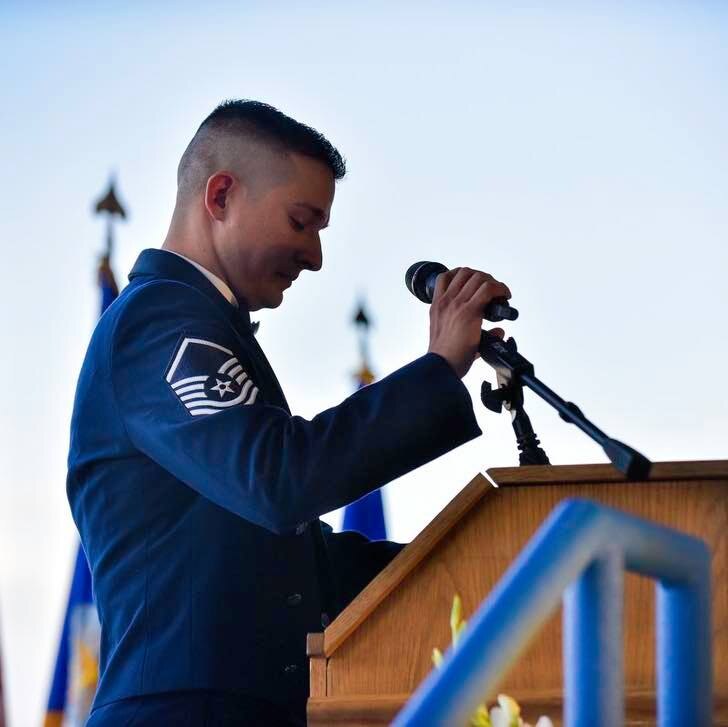
Use of military rank, job titles, and photos in uniform does not imply endorsement by the United States Air Force or the Department of War.
The money gap was real.
Federal Election Commission reports through July 15, 2026 show Hartzell Gray with $250,117.99 in total receipts and $205,149.00 in total disbursements. Herrera reported $41,656.63 in total receipts and $22,673.73 in total disbursements.
Put plainly: Gray reported about six times the money raised and about nine times the spending. Missouri Democratic campaigns know what it means to be vastly underfunded. That is part of why Sapphire exists: to help campaigns stretch every dollar, every list, and every hour.
Herrera still won. Public result reports show a narrow win over Gray in the Democratic primary for Missouri's 4th Congressional District, with Herrera finishing first in a crowded field despite being outraised six-to-one.
Sapphire was built into the campaign.
Sapphire served as Herrera's Primary/General Consultant. That meant the work was not limited to advice from the outside. Sapphire helped shape the strategy, data program, outreach lanes, operating rhythm, and follow-up structure behind the campaign.
Herrera used Sapphire tools and Sapphire data to win. The campaign did not have to stitch together a stack of disconnected systems while also trying to raise money, contact voters, recruit volunteers, and respond to the race.
The advantage was not software for software's sake. The advantage was a campaign machine that helped the team decide who mattered, what needed to happen next, and how to keep the work moving.
The data made the map usable.
A district map does not tell a campaign where momentum can be built. Good data does. Sapphire helped turn the race from a broad geography into reachable universes: people to call, doors to prioritize, supporters to follow up with, and prospects worth the campaign's limited time.
Internal Sapphire review found 17,014 data-readiness records tied to the campaign, including 14,682 phone-ready records and 9,041 walk-ready records. Those numbers matter because underfunded campaigns cannot afford to treat every contact like it has the same value.
The job was to make the next move clearer. Who can be reached? Who needs follow-up? Where can a volunteer shift matter? Which calls should happen before the next ask, event, or voter-contact push?
The ground game had discipline.
Herrera's campaign needed more than a message. It needed repeatable contact work. Sapphire's infrastructure helped organize calling, volunteer outreach, grassroots follow-up, donor work, and GOTV activity so the campaign could keep pressure on the right people.
CallForge reporting and campaign records show dozens of Herrera campaign lists with more than 15,000 contacts completed across donor, volunteer, grassroots, and GOTV-oriented calling work.
That is what campaign infrastructure should do: turn pressure into action. A list becomes a call. A call becomes a follow-up. A supporter becomes a volunteer, donor, validator, or voter-contact target. The campaign learns what changed and moves again.
Money matters. Movement wins.
Money matters in politics. No serious campaign should pretend otherwise. But money is not the same thing as movement.
A better-funded campaign can still lose to a campaign with sharper targeting, tighter follow-up, and a ground game that keeps moving. Herrera's primary win showed what happens when strategy, data, tools, and field work are not treated as separate lanes. They become one operating system.
That is the work Sapphire does. We help campaigns build the machine around the people already carrying the race, so the team can move faster, build stronger, and compete with discipline.
Next move
Need the campaign machine behind your race?
Sapphire helps Democratic campaigns turn data, outreach, fundraising, monitoring, and follow-up into weekly movement.